A MONTH IN THE FALKLANDS
20th October 2026
Our most recent meeting was the first Zoom venture of the season and it all went very well. We have previously had a visit from our speaker, Tracy Lund, and we have enjoyed her excellent photos and her passionate care for the wildlife she works with. She will be back in person later in the season.
Tracy advocated flexibility of kit for this trip. Her 100 – 400mm lens served her well. A word she used frequently was inquisitive. Here, if you are calm and patient, the wildlife approaches you and a long lens is a positive disadvantage. They also weigh more and excess baggage rates are quite punitive on internal flights, so heavy kit is to be avoided.
The trip took over two years in the planning to secure the best accommodation. Places are very limited and facilities are no more than you need at the self-catering cabins. In January it was fairly warm at 12 – 30C in the daytime. The route was planned to visit the best spots for each species. Native hares were first on the list, but Tracy does not waste time while she waits and she shared some of the bird species spotted there.
The Falklands is an archipelago. Most of the inter-island flights were about an hour in a very small plane which flies low enough for some great downward views. If whales are spotted the pilot will turn to offer a good view. The lodging cabins on each island were all within an easy walk of the shore.
Saunders Island was the location for all five species of breeding penguin in the area. The Gentoo penguins approached the visitors and Tracy had enjoyed lying down getting shots of them walking. The constantly blowing sand gave a blurred foreground ‘mushiness’ which Tracy is trying to get judges to accept. The Magellanic penguins were more wary, but followed the gentoos.
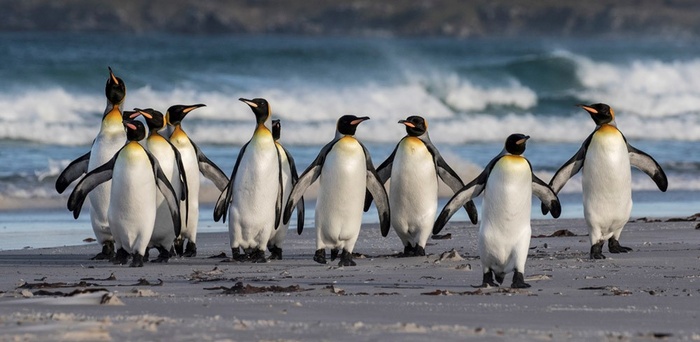
There King Penguins have established a big colony and come to inspect visitors. In one area there is a ring of stones to limit the approach of humans, but this does not stop the penguins crossing it to see who is there.
Naturally, where there are breeding birds there are predators and Tracy introduced us to several of them and also to the black browed albatross which she had captured in a wonderful close up shot.
At ‘The Rookery’ a fresh water stream known as the penguin shower runs down the cliff. The rock hoppers stop there on their way up to the nesting ground to wash the salt from their feathers. Tracy slithered down the cliff it to get her photos then joined the penguin march to find a manageable route back to the top.
On Sea Lion Island the penguin chicks came over to the photo party and sat with them for hours while their parents fished. Tracy seemed to take her babysitting very seriously. The fifth penguin the group saw was a single macaroni, which lives with and has interbred with the rock hoppers.
Other than hares, we saw elephant seals which you can walk among and sea lions which you are well advised to leave alone. An introduced mammal on Weddell Island is the Patagonian Grey Fox. They have been proven to have a diet of berries and crustaceans, but despite this and the exhortations of his wife, the current owner is determined to eradicate them and Tracy has vowed not to return there because of this.
Next week we have the second of our open competitions this season. There will be the usual classes for Colour and Mono prints and digital images. Vin Scothern will judge for us and many members are familiar with his work from the N&EMPF exhibitions where he has enjoyed much success. In the past his assessment has been demanding but fair.
The 2026/2027 season continues until 26th April 2027, with weekly meetings on Mondays at 7.30pm in St Joseph’s Hall, Babworth Road, Retford. Guests are welcome for £5 a night and have three no obligation visits to decide about becoming members.
Full details about the club are on our web site: http://www.retford-photographic.co.uk
Tracy advocated flexibility of kit for this trip. Her 100 – 400mm lens served her well. A word she used frequently was inquisitive. Here, if you are calm and patient, the wildlife approaches you and a long lens is a positive disadvantage. They also weigh more and excess baggage rates are quite punitive on internal flights, so heavy kit is to be avoided.
The trip took over two years in the planning to secure the best accommodation. Places are very limited and facilities are no more than you need at the self-catering cabins. In January it was fairly warm at 12 – 30C in the daytime. The route was planned to visit the best spots for each species. Native hares were first on the list, but Tracy does not waste time while she waits and she shared some of the bird species spotted there.
The Falklands is an archipelago. Most of the inter-island flights were about an hour in a very small plane which flies low enough for some great downward views. If whales are spotted the pilot will turn to offer a good view. The lodging cabins on each island were all within an easy walk of the shore.
Saunders Island was the location for all five species of breeding penguin in the area. The Gentoo penguins approached the visitors and Tracy had enjoyed lying down getting shots of them walking. The constantly blowing sand gave a blurred foreground ‘mushiness’ which Tracy is trying to get judges to accept. The Magellanic penguins were more wary, but followed the gentoos.
There King Penguins have established a big colony and come to inspect visitors. In one area there is a ring of stones to limit the approach of humans, but this does not stop the penguins crossing it to see who is there.
Naturally, where there are breeding birds there are predators and Tracy introduced us to several of them and also to the black browed albatross which she had captured in a wonderful close up shot.
At ‘The Rookery’ a fresh water stream known as the penguin shower runs down the cliff. The rock hoppers stop there on their way up to the nesting ground to wash the salt from their feathers. Tracy slithered down the cliff it to get her photos then joined the penguin march to find a manageable route back to the top.
On Sea Lion Island the penguin chicks came over to the photo party and sat with them for hours while their parents fished. Tracy seemed to take her babysitting very seriously. The fifth penguin the group saw was a single macaroni, which lives with and has interbred with the rock hoppers.
Other than hares, we saw elephant seals which you can walk among and sea lions which you are well advised to leave alone. An introduced mammal on Weddell Island is the Patagonian Grey Fox. They have been proven to have a diet of berries and crustaceans, but despite this and the exhortations of his wife, the current owner is determined to eradicate them and Tracy has vowed not to return there because of this.
Next week we have the second of our open competitions this season. There will be the usual classes for Colour and Mono prints and digital images. Vin Scothern will judge for us and many members are familiar with his work from the N&EMPF exhibitions where he has enjoyed much success. In the past his assessment has been demanding but fair.
The 2026/2027 season continues until 26th April 2027, with weekly meetings on Mondays at 7.30pm in St Joseph’s Hall, Babworth Road, Retford. Guests are welcome for £5 a night and have three no obligation visits to decide about becoming members.
Full details about the club are on our web site: http://www.retford-photographic.co.uk