A NIGHT OF PRINTS
19th January 2026
Ian Pinn is one of the favourite speakers at Retford. He presents his work as A2 prints, which is a real treat. He uses a variety of papers for different types of shot and discusses how this choice influences how the shot is viewed.
This time he came with a wonderful selection of landscape shots taken in a wide variety of locations around the British Isles. There were several shots printed in both colour and monochrome and it was interesting to try to work out why one worked better than the other. The audience wasn’t unanimous on the verdict, so it gave food for thought.
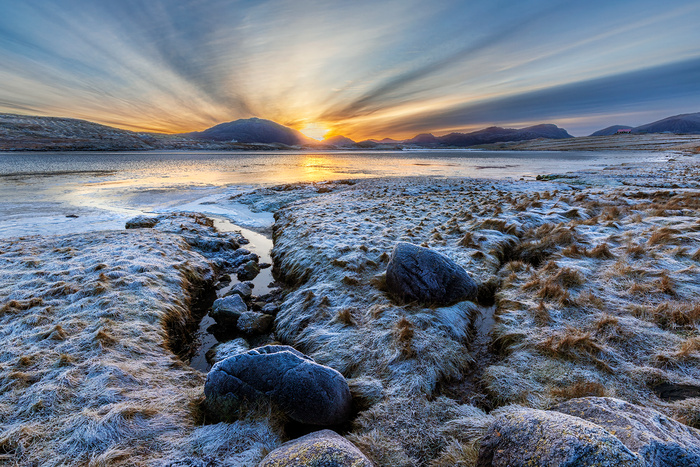
A further opportunity to compare was provided by several shots mounted in a colour close to white and also in black. There was a striking difference between the two. We say that the images presented in our competitions are not judged for the mount, but it was an inescapable fact that the print looked quite different depending on the colour of the mount.
There were two main categories of shot with several minor players. Ian clearly loves scenes with water in them; both lakes and shorelines. He also loves sunrises and often combines the two to very good effect.
Ian epitomised the landscape photographers we hear from. A key ability for anyone wishing to engage in this genre of photography seems be a willingness to get up in the middle of the night – 3am in summer, we were told, as the sun comes up early – and to endure being bitterly cold, soaking wet or both. Some among us gave thanks for the landscape enthusiasts who go to these lengths to ensure that people such as us in clubs can enjoy the fruits of their dedication.
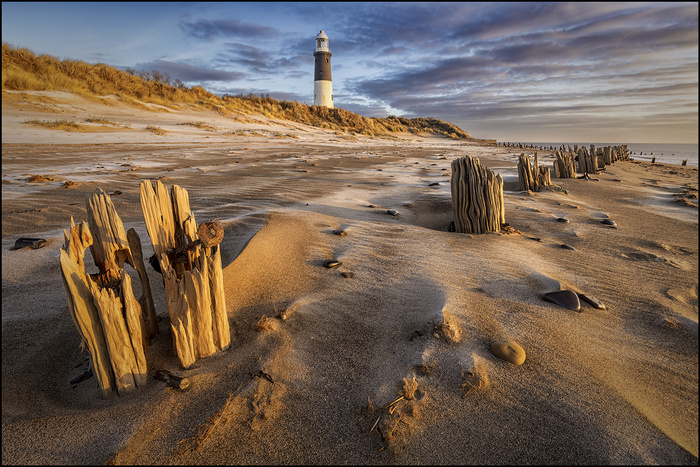
Ian added ‘stinky mud’ to the difficulties presented to the intrepid landscape photographer. It seemed to be a choice between that and ankle-breaking rocks or limestone pavements, given that getting into place before the sun comes up is key to capturing a sunset and visibility is necessarily limited. He added that he is a particular lover of stormy weather and is not put off by lashing rain – to the point of totally soaking three pairs of boots in two days on a trip remembered as ‘the wet trip’.
One of Ian’s minor themes was fungi. We seldom see anyone taking a particular interest in this particular branch of photography. He had got some excellent shots of different varieties. They grow in mainly dark and dank places, often under trees, so the light is not good when you are shooting them. Ian uses focus stacking to get very sharp images and he discussed the merits of different software for such work.
Trees were another of Ian’s topics and we saw some absolutely glorious autumn shots. One of his mini series of shots started with the RAW version straight out of the camera showing a, frankly uninspiring, shot of a small beech sapling under tall trees. It was a minor feature of the image. This was one of Ian’s examples of making the most of the images you have. He thought that the sapling had potential and cropped in so that it was central to the composition. He then adjusted the exposure, contrast and vibrancy and showed a very engaging shot where the brightly coloured leaves of the sapling were transformed into a focal point in a lovely, tranquil photo.
A similar thought process saw a shot on the rugby field cropped down to a square about an eighth of the whole, drawing the eye to the player clutching the ball as he was tackled to the ground.
Ian was emphatic that, having made the effort to get to your chosen vantage point or area, you should make the most of the effort. Look around, try different angles, viewpoints, positions, exposures and possibly lenses to see what you can do. Unsuccessful experiments are easily deleted, but by working the scene you can come away with several good shots and not just the one you went for – and didn’t necessarily get.
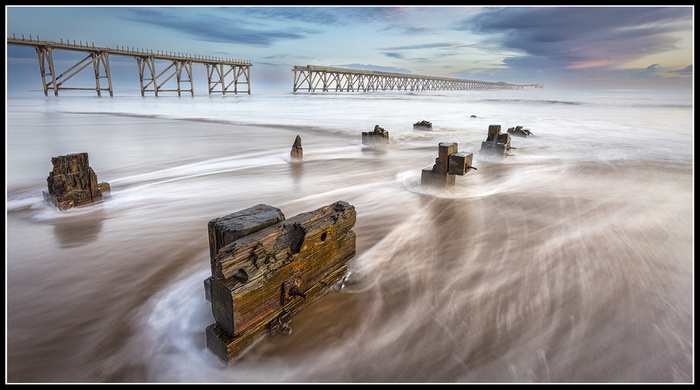
Ian showed a selection of watery shots using long exposure and spoke about taking them on a receding tide for both safety and effect. He also showed a rather nostalgic shot of Spurn Point in the days before the sand shifted and made the road unusable. The special aspect of this shot was that as he stood there, he noticed frost forming on the sand. Ian was warmly thanked for his inspiring presentation.
Next week we have our annual competition for a panel of three images. It is always one of the highlights of the year. We hope to see everyone there. Club nights continue until 20th April, and guests or new members are always welcome.
Full details of the club and programme are on the: http://www.retford-photographic.co.uk/
Meetings are weekly on Mondays at 7.30pm in St Joseph’s Hall, Babworth Road.