THE WAY I SEE IT
01st December 2025
Travel, Landscape and Travel Documentary photographer, Chris Upton, brought his talk ‘The Way I see It’ for his seventh visit to Retford. He is one of our most popular speakers and we were not disappointed.
Chris aims to offer helpful tips, but acknowledged that with the usual range of experience in a club, there would not be something new for all. He certainly gave a good grounding for newer members and a helpful refresher for the more experienced. The key message of the night was ‘Get to know your camera and practice, practice, practice’. He likened being able to instinctively use the camera to driving. It wants to be virtually automatic.
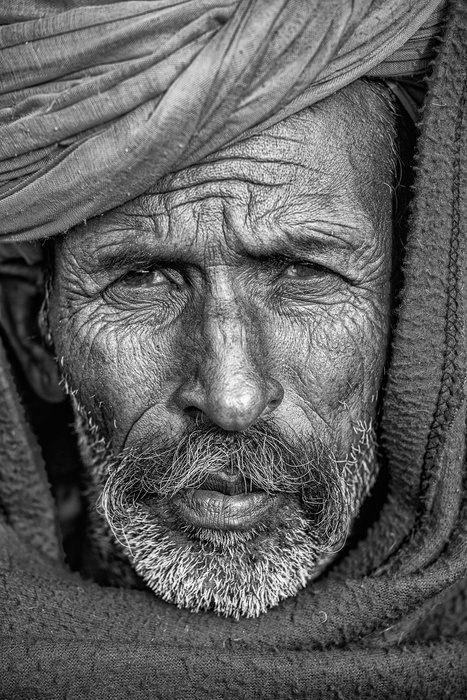
Given that this presents difficulties in changing camera and even more brand, it was good to hear that his suggestions would probably help us to improve more than newn kit.
Good images require more than good composition and the right conditions. They require experience. The only way to get that is by working at it. Chris divided ‘improving’ into learning the technical generics, top amongst which is the exposure triangle, and knowing your camera.
The exposure triangle deals with the interrelationship between shutter speed, aperture and ISO, the functions involved in using the manual shooting mode (M). They need to be considered for every shot, alongside getting to know how to focus manually and decide if exposure compensation is needed. Once these functions are familiar, people can afford to use the semi-automatic function best suited to their subject as they will recognise when they need to take charge. Chris accompanied his technical information with helpful examples.
At some time, most of us will have heard that cameras are made to expect to see skin tones, which are approximately 18% grey. This seems an obscure fact, but matters when you want to have snow rendered white rather than grey or to photograph a black dog against a dark background and don’t want it all lightened.
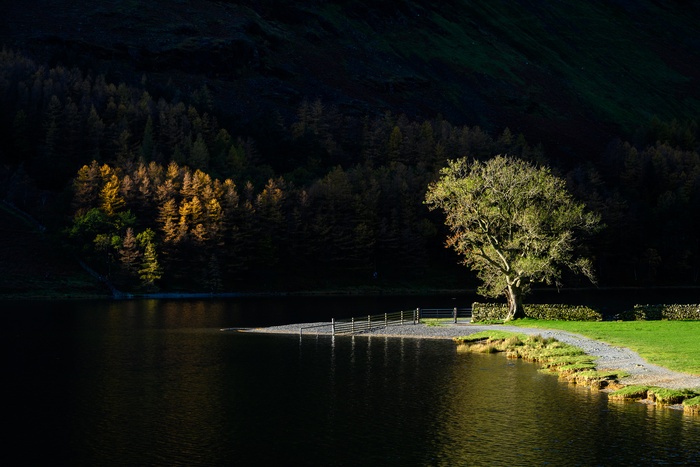
Having mastered the basics, you need to get out and use your camera. A few hours using just one lens, or keeping to e.g. one aperture while adjusting the exposure and ISO will help reinforce what you know. In general, a wide-angle lens makes foreground objects seem bigger and those further away smaller. A long lens will put the background out of focus and is good for nature. To get some interest in the foreground, it may be helpful to crouch and get a lower view. Judges like eye level views of animals and children.
[align=center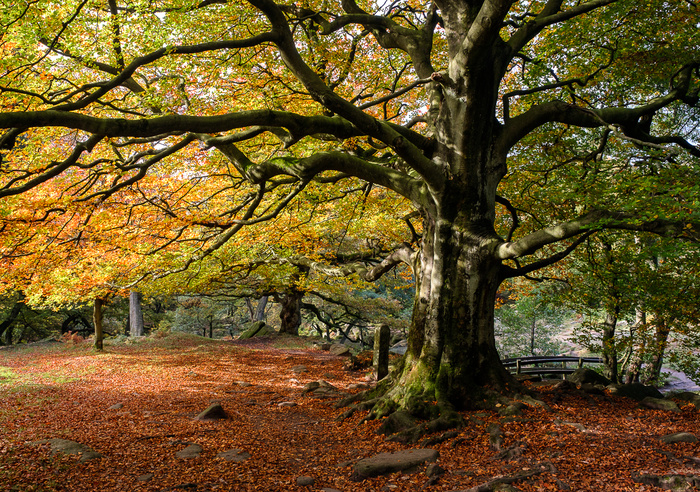
Chris suggested that if we harbour aspirations to improve our landscape work, we need to research a bank of locations and be ready to head out as soon as there is a good chance the conditions will be right – regardless of the weather. Overcast conditions are great for waterfalls while sunrise, sunset and blue hour – the period directly after the sun has set – are the best for light and interesting shots.
Chris advised going out and looking with fresh eyes rather than trying to replicate well known shots, and to always look around and behind to see what you might be missing. Go out with a plan, and if heading to a popular location, aim to be there a minimum of an hour before your chosen shooting time to claim a good spot. He suggested various apps to help discover the critical times of day at any location and tide times for both safety and interest at the coast. Shoot on a receding tide was his advice to avoid getting caught out by the rising water. Speaking about ‘Composition’ and ‘Adding Dimension’, Chris illustrated his points with his own images at different stages from camera to finished product, which was very helpful.
Building on comments frequently made by judges as our work has improved and we have ironed out more basic mistakes, Chris demonstrated looking for and removing distractions. This can be remedied to an extent in post processing and learning to process was something else he recommended. If you want to compete, getting it right in camera is still the best advice, but the winners will have done some subtle tweaks to improve their shots. Desaturating colours was an interesting example.
Chris’ concluding remarks were to review, refine and reshoot. If you put the work in simply taking photos to learn about your camera, your subject and yourself, when that special moment arrives you will be better equipped to do it justice.
Next week we look forward to our evening of Christmas entertainment, complete with buffet. This will mark our seasonal closure. We reopen on January 5th with a Zoom presentation from Emma Finch on ‘Portraits with Impact’. We hope to see everyone then and maybe a few new faces as well.
Full details of the club and programme are on the: http://www.retford-photographic.co.uk/
Meetings are weekly on Mondays at 7.30pm in St Joseph’s Hall, Babworth Road. We have a from our mid-season break from December 9th, resuming on January 5th then, continuing until the end of April 2026.
Chris aims to offer helpful tips, but acknowledged that with the usual range of experience in a club, there would not be something new for all. He certainly gave a good grounding for newer members and a helpful refresher for the more experienced. The key message of the night was ‘Get to know your camera and practice, practice, practice’. He likened being able to instinctively use the camera to driving. It wants to be virtually automatic.
Given that this presents difficulties in changing camera and even more brand, it was good to hear that his suggestions would probably help us to improve more than newn kit.
Good images require more than good composition and the right conditions. They require experience. The only way to get that is by working at it. Chris divided ‘improving’ into learning the technical generics, top amongst which is the exposure triangle, and knowing your camera.
The exposure triangle deals with the interrelationship between shutter speed, aperture and ISO, the functions involved in using the manual shooting mode (M). They need to be considered for every shot, alongside getting to know how to focus manually and decide if exposure compensation is needed. Once these functions are familiar, people can afford to use the semi-automatic function best suited to their subject as they will recognise when they need to take charge. Chris accompanied his technical information with helpful examples.
At some time, most of us will have heard that cameras are made to expect to see skin tones, which are approximately 18% grey. This seems an obscure fact, but matters when you want to have snow rendered white rather than grey or to photograph a black dog against a dark background and don’t want it all lightened.
Having mastered the basics, you need to get out and use your camera. A few hours using just one lens, or keeping to e.g. one aperture while adjusting the exposure and ISO will help reinforce what you know. In general, a wide-angle lens makes foreground objects seem bigger and those further away smaller. A long lens will put the background out of focus and is good for nature. To get some interest in the foreground, it may be helpful to crouch and get a lower view. Judges like eye level views of animals and children.
[align=center
Chris suggested that if we harbour aspirations to improve our landscape work, we need to research a bank of locations and be ready to head out as soon as there is a good chance the conditions will be right – regardless of the weather. Overcast conditions are great for waterfalls while sunrise, sunset and blue hour – the period directly after the sun has set – are the best for light and interesting shots.
Chris advised going out and looking with fresh eyes rather than trying to replicate well known shots, and to always look around and behind to see what you might be missing. Go out with a plan, and if heading to a popular location, aim to be there a minimum of an hour before your chosen shooting time to claim a good spot. He suggested various apps to help discover the critical times of day at any location and tide times for both safety and interest at the coast. Shoot on a receding tide was his advice to avoid getting caught out by the rising water. Speaking about ‘Composition’ and ‘Adding Dimension’, Chris illustrated his points with his own images at different stages from camera to finished product, which was very helpful.
Building on comments frequently made by judges as our work has improved and we have ironed out more basic mistakes, Chris demonstrated looking for and removing distractions. This can be remedied to an extent in post processing and learning to process was something else he recommended. If you want to compete, getting it right in camera is still the best advice, but the winners will have done some subtle tweaks to improve their shots. Desaturating colours was an interesting example.
Chris’ concluding remarks were to review, refine and reshoot. If you put the work in simply taking photos to learn about your camera, your subject and yourself, when that special moment arrives you will be better equipped to do it justice.
Next week we look forward to our evening of Christmas entertainment, complete with buffet. This will mark our seasonal closure. We reopen on January 5th with a Zoom presentation from Emma Finch on ‘Portraits with Impact’. We hope to see everyone then and maybe a few new faces as well.
Full details of the club and programme are on the: http://www.retford-photographic.co.uk/
Meetings are weekly on Mondays at 7.30pm in St Joseph’s Hall, Babworth Road. We have a from our mid-season break from December 9th, resuming on January 5th then, continuing until the end of April 2026.